Table Of Content

Something like a checkbox or a date picker helps visitors complete actions. Bread crumbs and other UI elements related to navigation give users a smooth experience. No matter what type of element they may be or where they are in a design, they all need to follow a similar logic.
Feelix
By continuously tracking the success metrics of your design system, you can identify areas that are lacking and make the necessary improvements that your team and users will benefit from. Maintaining a design system ensures that it evolves with changing customer needs and business objectives. It can be helpful to establish a regular cadence of feedback to gain input from team members in order to continuously refine the design system. Encourage team members to contribute back to the design system in order to fill gaps in the experience. Design system office hours are also a great way to broadcast any new changes or fixes to the design system components. Once your design system is up and running, provide thorough training to help your team use it effectively.
Help Scout Style Guide
Educate your team on the accessibility challenges different people face and teach them proven best practices that can make a noticeable difference for millions of people worldwide. A great design system is bound to be shared again and again, giving the brand that creates it the best form of press. The creator of these best practices gets credit, even in competitive industries where it can be difficult to stand out.
Different Types of Design Systems
To sum up, a design system is a collection of reusable user interface components, code, and styling guidelines that reduces redundancy in product development. A team trying to build a product may consist of designers, developers, product managers, and others. The design system helps all members of the team make reference to the brand guidelines, no matter what they working on. It also helps to make sure everyone, including stakeholders, are involved in the design process, and facilitates collaboration. UXPin covers all aspects of product design from design to prototyping while collaborating with the team.
As a result, you’ll come across a few different types of design systems. We’re going to talk about the three major design systems that are commonly used today. A design system should be thought of as a living document that is constantly evolving as your company grows and changes. It should be flexible enough to accommodate the needs of different teams and projects, yet specific enough to provide clear direction. Consequently, mature design systems may also evolve to include sections on content, brand, typography, and accessibility. In order to create a consistently great experience for our users, Priceline One is meant to be the single source of truth for user interface standards for both designers and developers.
Standardize styles, variables, and components so that everything from color to padding scales seamlessly across your products and brands. Figma enables design system adoption for more consistency and efficiency. A collection of tools, kits, plugins and guides to help simplify the creation process for our users. Contrary to what you may think, working with Mixpanel is a lot of fun, despite all the analytical power it provides.

The purpose of the Salesforce CRM is to improve marketing, commerce, IT, service and sales efforts – and allows their users to do the same with their users. UXPin users can conveniently find everything they need from Carbon in their account as well. Now you can nest symbols within other symbols to build and maintain complex layouts more easily and efficiently.
Material You: What it is and what we love about it - Android Police
Material You: What it is and what we love about it.
Posted: Wed, 13 Apr 2022 07:00:00 GMT [source]
Most design systems contain accessibility guidelines in order to increase the usability of products for people with all kinds of abilities. These guidelines ensure that the design is inclusive and complies with accessibility standards like WCAG (Web Content Accessibility Guidelines). This includes colour contrast, keyboard navigation and other accessibility features.
So, they developed GEL, or Global Experience Language, to ensure uniformity and consistency across every one of those billion+ experiences. Samsung’s design system for smartwatch app developers offers several detailed resources for creating the best user interface. This is especially useful because designing for a smartwatch is very different than designing for a smartphone. The recommendations in the design system call out the challenges and opportunities developers have to engage users.
A set of principles, patterns and tools created to provide a common design framework for crafting user interfaces within Liferay product ecosystem. Blocks is the shared approach, language, and communication between design, engineering, and product teams at CBRE Build. The site contains a library of reusable UI and code components that are used to solve a variety of design problems. BDS is a series of guidelines used for creating unified experience and UI.
One of the most difficult parts of outsourcing is maintaining quality and communicating your requirements with external teams. According to a survey, many businesses opt-in for design systems for the benefit of reusability of code, efficiency in design, and UI/UX consistency. When building a design system, you need to understand the context behind what you’re building it for, and decide how many systems you might ultimately need to create and maintain. Design systems make it much easier to test what's working, since you can A/B test design patterns and components rather than have to tear apart whole pages or flows. If you are working on enterprise systems or large-scale corporate products (internally or externally) Carbon is a massive example of how to do it successfully.
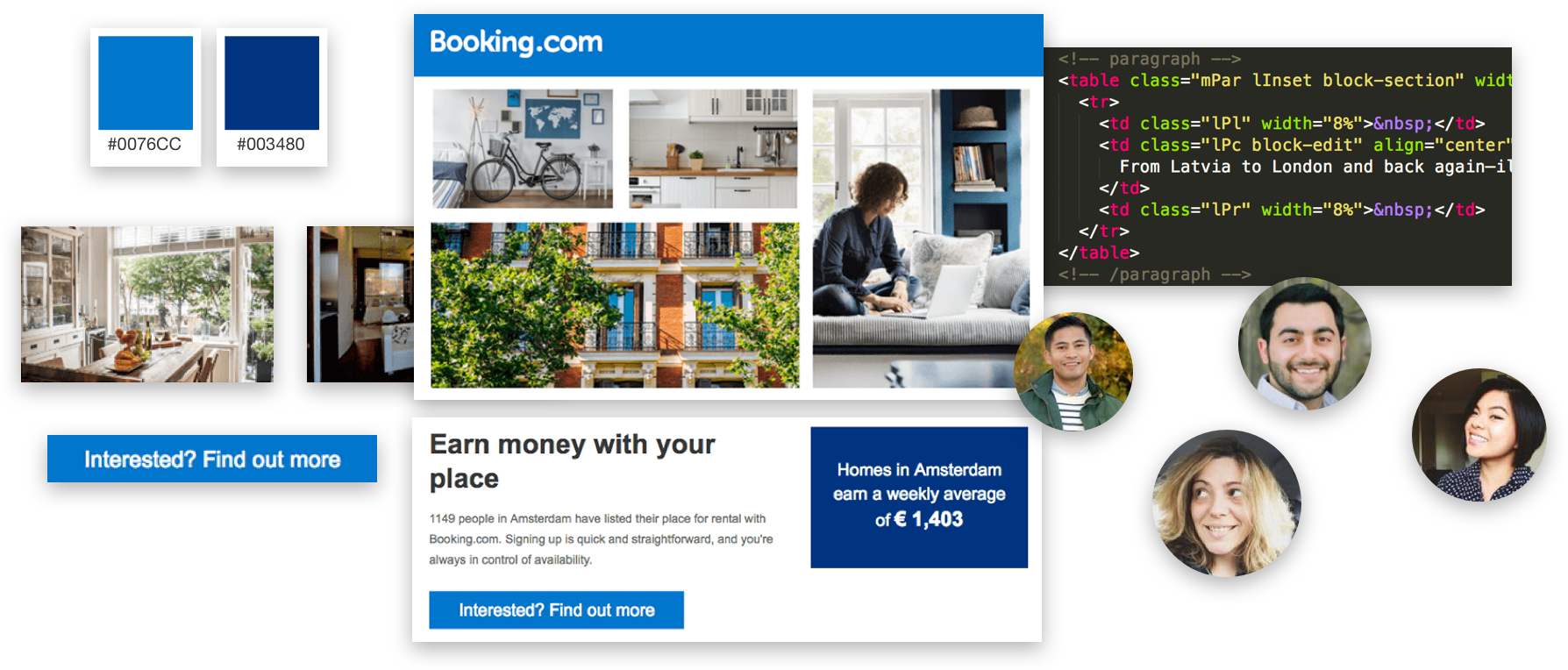
The design system aims to offer a collection of predefined principles and elements that guarantee uniformity and coherence in a company's brand identity. The Liferay Lexicon design system is a language framework for creating within the Liferay ecosystem. It provides patterns, components, language recommendations, satellites, and models to build from.
In our ebook, learn why experts are investing in scalable design systems and how they are thinking about the future of design systems. The Mailchimp Pattern Library is what Mailchimp uses to build its email marketing application. The simple, no-nonsense approach is apparent from the moment you see the system’s website, which drops you right into the system’s color foundations.
By leveraging a design system, they can build efficiency into their workflow by speeding up product development and ultimately saving time and money that can be invested in other areas of the business. A design system would be incomplete without UI components, the fundamental building blocks of an interface. For new designers, a design system can serve as an onboarding tool, educating them on the product and principles, and enabling them to contribute sooner. As the system matures, it can provide teams with a shared vision and language that leads to better understanding and more consistent products. This, in turn, can increase trust with the people using your product, leading to a more engaged and loyal customer base over time. It outlines the visual design and brand elements like typography, color and logo usage.
Even the most routine user interfaces are given a jolt of fun by their bright color schemes and whimsical images. Let me start by saying that this Mailchimp design system is a work of art. It is jam-packed with every element you would need to create an amazing email campaign, website, or landing page. Simply choose a component, give it the customizations you want, and presto!
While the company hasn’t published its full design system guidelines on the web, you can get a glimpse of it, shared on Dribbble. Details of its Design Language System are scant, but the company’s design team previously published thoughtful articles on how they approach design. Fluent emphasizes light, depth, and texture while intentionally using physical objects in its vocabulary to make interactions and experiences feel natural and organic. At the same time, Fluent is created for flexibility and scalability at its core, made with a clear drive toward multiplatform experiences. Unveiled in 2017, Microsoft’s Fluent Design System is an open-source design system developed to establish unified experiences across various platforms and operating systems, from mobile phones to televisions. One of the best ways to learn design systems is by looking at great examples.



No comments:
Post a Comment